
Claude Code Meets Web3: 20 Ways AI Is Actually Changing Blockchain Development
 Ricky
Ricky
If you’ve spent any time building in Web3 over the last couple of years, you know the drill: write Solidity (or Rust, if you’re on Solana or Stylus), pray you haven’t introduced a reentrancy bug, pay for an audit that takes six weeks and costs six figures, then deploy to mainnet and hold your breath. It’s slow, expensive, and weirdly manual for an industry that claims to be on the cutting edge of technology.
Something has started to change — and it isn’t just “ChatGPT can write a smart contract now.” The real shift is in agentic AI: tools that don’t just autocomplete your code, but operate autonomously inside your development environment, reading your repo, running your tests, interacting with on-chain data, and flagging problems before they become million-dollar exploits.
Claude Code, Anthropic’s terminal-based CLI tool, sits at the center of this movement. Unlike a chatbot in a browser window, it reads and writes to your local filesystem, executes shell commands, manages git, and — through the Model Context Protocol (MCP) — connects directly to external APIs, databases, and blockchain nodes. Pair it with domain-specific “skills” (structured markdown files that inject expert-level instructions into the model’s context), and you’ve got something that looks less like a coding assistant and more like an opinionated senior engineer sitting in your terminal.
What follows is a breakdown of twenty real, verifiable ways developers and security researchers are putting this to work in blockchain ecosystems right now. Some are mature; others are bleeding-edge. All of them point toward a future where the tedious, error-prone scaffolding of Web3 development gets handled by AI — so you can focus on the protocol design that actually matters.
A quick note on honesty
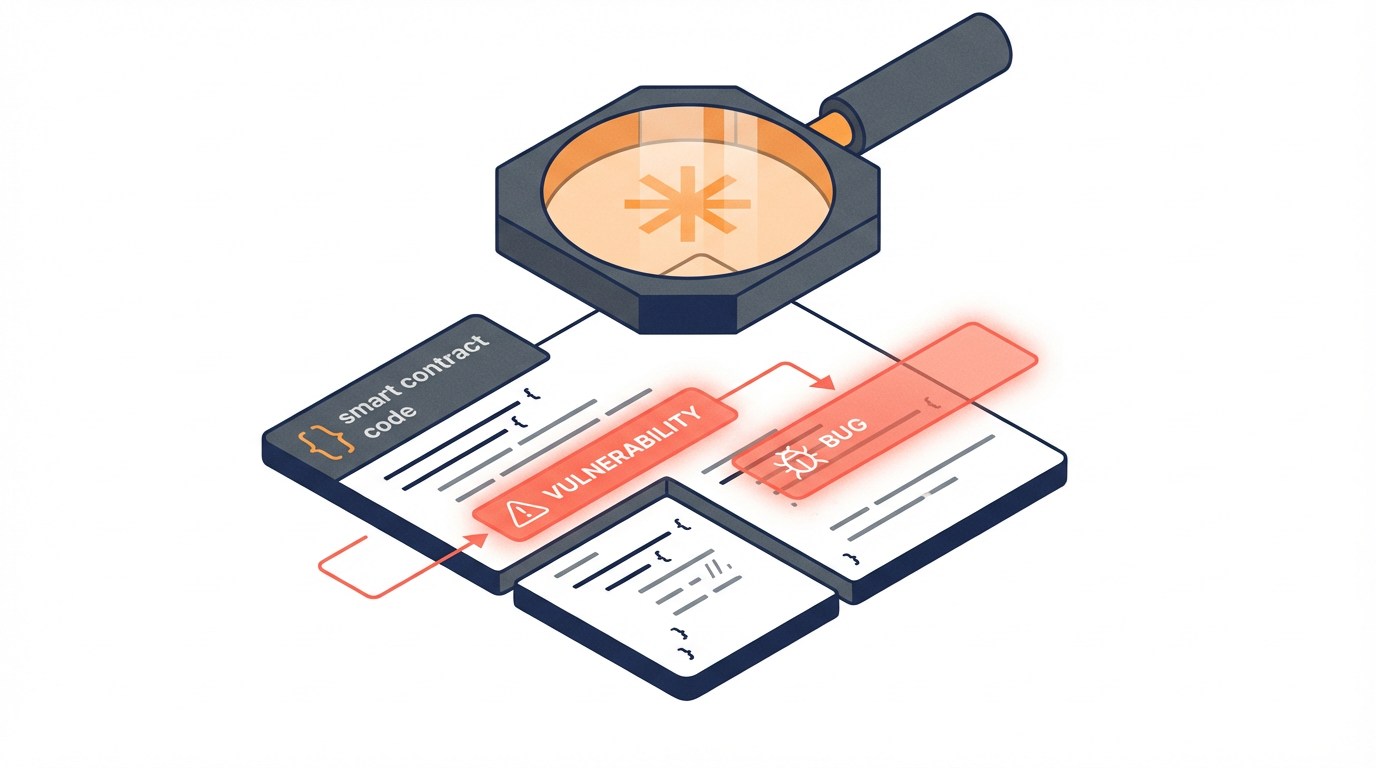
AI-assisted tooling in crypto is overhyped in some corners and underappreciated in others. Throughout this piece, I’ll flag where claims are well-supported and where you should bring your own skepticism. LLMs are powerful, but they’re probabilistic — and in a domain where a single logic error can drain a treasury, “usually correct” isn’t good enough on its own. Human oversight remains non-negotiable.
Security Auditing: Where the Stakes Are Highest
Smart contracts are immutable. Once deployed, you can’t patch them the way you’d hotfix a Rails app. (Upgradeable proxies exist, but they introduce their own severe risks — more on that later.) This makes pre-deployment auditing the single most consequential step in the entire development lifecycle, and it’s exactly where AI tooling delivers the most immediate value.
01Behavioral State Analysis for Deep Contract Audits
QuillAudits, a security firm that’s audited over 1,500 Web3 projects, recently open-sourced a set of ten Claude Code skills under their QuillShield banner. The flagship methodology is Behavioral State Analysis (BSA), which breaks auditing into algorithmic phases: first extracting the behavioral intent of a contract (what is this function supposed to do economically?), then building a threat model around economic incentives, permission boundaries, and state integrity.
What makes this different from running Slither or Mythril is the shift from pattern-matching to intent-based reasoning. Traditional static analyzers are great at catching known vulnerability patterns, but they produce a lot of false positives and routinely miss subtle logical flaws — the kind where a function does exactly what the code says, but not what the developer meant. The BSA approach uses the LLM’s ability to reason about what the code is trying to achieve and then asks: under what conditions could that intention be subverted?
You can also layer on the open-source Auditmos security skills library, which auto-discovers relevant security checklists based on the architectural patterns it detects in your codebase.
02Semantic Guard Analysis for Access Control
One of the most common — and most devastating — categories of smart contract bugs is a missing access control modifier. Picture a function that should only be callable by the contract owner, but some developer forgot to add the onlyOwner modifier during a refactor. Static analyzers can catch some of these, but they struggle with consistency analysis: detecting that a modifier is used on nine out of ten admin functions, but not the tenth.
The Semantic Guard Analysis skill (located in QuillAudits’ plugins/semantic-guard-analysis/ directory) constructs a complete usage graph of all access controls across the codebase. It maps which functions enforce which checks — whenNotPaused, onlyOwner, custom modifiers — and cross-references that graph against the protocol’s architecture. When it finds a function that bypasses a check enforced everywhere else, it flags the inconsistency.
In practice, this is one of those things that sounds straightforward but is genuinely tedious to do manually, especially in codebases with dozens of interacting contracts.
03State Invariant Detection
DeFi protocols are essentially financial state machines. They depend on strict mathematical relationships: the sum of all user balances must equal the total supply; collateral-to-debt ratios must hold under all execution paths; AMM reserves must stay synchronized. Break one of those invariants and you’ve got a drain vector.
The State Invariant Detection skill does something interesting: it infers conservation rules from the code without requiring the developer to specify them. It parses the contract logic, deduces the intended mathematical constraints, and then audits every state-changing function to check whether any execution path could violate them.
This is particularly valuable for tokenomics validation. If a burn mechanism reduces a user’s balance but forgets to decrement the global totalSupply, you’ve got a silent accounting error. That’s exactly the kind of bug that slips past unit tests but shows up catastrophically in production.
04Cross-Chain Reentrancy Pattern Analysis
Reentrancy is the attack vector that never dies. The original DAO hack was a simple withdraw-then-reenter pattern, and most static analyzers handle that case well now. But modern DeFi architectures face far more sophisticated variants: cross-function reentrancy, cross-contract reentrancy, read-only reentrancy (where an attacker manipulates a spot price in one protocol while simultaneously exploiting a dependent protocol), and callback-based reentrancy through ERC-777 and ERC-1155 hooks.
The QuillAudits Reentrancy Pattern Analysis skill builds multi-contract call graphs, verifies compliance with the Checks-Effects-Interactions pattern, and traces state changes surrounding external calls. The real value is in catching the read-only variant — it requires reasoning across multiple contracts and understanding how price oracle manipulation can cascade through composable protocols. That’s exactly the kind of multi-step reasoning that LLMs handle well and pattern-matching tools don’t.
05Proxy and Upgrade Safety Validation
Upgradeable contracts are a necessary evil. They let you fix bugs post-deployment, but they introduce a whole category of risks: storage layout collisions (where a variable in the new implementation accidentally overwrites a different variable’s storage slot), uninitialized implementations, and function selector clashes.
The Proxy & Upgrade Safety skill supports Transparent, UUPS, Beacon, and Diamond (EIP-2535) proxy architectures. Before you commit an upgrade, it maps the EVM storage slot allocations of both the existing and proposed implementations, then flags any modification that would cause variables to overwrite each other. If you’ve ever bricked a protocol by corrupting storage during an upgrade, you understand why this matters.
| Threat Category | Skill / Method | Core Detection Approach |
|---|---|---|
| Access control bypasses | Semantic Guard Analysis | Usage graphs of require and modifier statements across the AST |
| Accounting errors | State Invariant Detection | Mathematical inference of supply, collateral, and debt constraints |
| Complex reentrancy | Call Graph Construction | Multi-contract CEI compliance tracking |
| Storage collisions | Proxy & Upgrade Safety | EVM storage slot mapping across implementation versions |
06Automated Fuzz and Invariant Testing with Foundry
Foundry has become the testing framework of choice for Solidity — fast, Rust-based, and built around property-based testing from the ground up. The problem is that writing good invariant tests is incredibly tedious. You need to define the properties, configure the fuzzer, set up the right fixtures, and iterate on edge cases. Most teams skip it or do it half-heartedly.
Claude Code can analyze a target contract and generate parameterized test functions, configure runs and depth parameters in foundry.toml, and set up invariant campaigns where Foundry generates random sequences of function calls trying to break your protocol’s core properties. It also handles Foundry cheatcodes like vm.expectRevert() and vm.prank() for simulating mainnet forking scenarios. Good resources to dig deeper: Regis Graptin’s guide on fuzz testing invariants and the CryptoGuide Foundry testing walkthrough.
This isn’t magic — you still need to review and validate the generated tests. But the lift of going from zero invariant tests to a solid baseline drops from days to hours.
Protocol and Smart Contract Development
07Arbitrum dApp Scaffolding with Stylus and Solidity
Arbitrum’s Stylus environment lets you write smart contracts in Rust (or C, or C++) that compile to WASM and run alongside traditional Solidity contracts. It’s compelling tech — massively reduced gas costs for compute-heavy operations, memory safety guarantees from Rust, full EVM interoperability — but the developer experience of setting up a hybrid Rust/Solidity monorepo from scratch is genuinely painful.
The Arbitrum dApp Skill, built by a DevRel engineer at Arbitrum who kept seeing developers get stuck in exactly this gap, encodes the full development workflow into a Claude Code skill. It scaffolds a pnpm monorepo with directories for React/Next.js frontends, Rust Stylus contracts using the sol_storage! macro, and Foundry-based Solidity contracts. It configures a local Docker-based nitro devnode, handles cross-language interop, and uses opinionated tooling choices (pnpm, Foundry, Viem) that eliminate the ambiguity that causes LLMs to generate inconsistent output.
As the creator put it: “Skills are a new primitive for developer tooling. Instead of writing documentation that developers read and then translate into code, you write structured knowledge that an AI agent consumes directly.”
08Solana Development in Rust
Solana’s programming model — Program Derived Addresses, Cross-Program Invocations, parallel execution constraints — has a genuinely steep learning curve. The Solana Development Skill and Helius’s developer guide show how to configure Claude Code with system prompts that mandate the Anchor framework and emphasize Rust’s safety paradigms.
When properly configured, the agent derives PDA seeds correctly, validates account ownership to prevent impersonation attacks, handles serialization through Anchor macros, and bundles operations to minimize transaction costs. It doesn’t replace understanding how Solana works, but it dramatically reduces the time from “I want to build on Solana” to “I have a working program on Devnet.”
09Zero-Knowledge Proof Circuit Generation
Writing zk-SNARK circuits in Circom is one of the most specialized skills in all of software engineering. You’re defining arithmetic constraints with specialized operators (==> and <==), every constraint must be strictly quadratic, and the compilation pipeline (R1CS files, WASM witnesses, snarkjs trusted setup phases) is dense and unforgiving.
Claude Code won’t turn a junior developer into a cryptographer, but it serves as a remarkably useful assistant for the process: defining signals, mapping mathematical constraints, ensuring quadratic compliance, and automating the compilation and setup phases. A solid starting resource is this practical code guide on Medium. The barrier to building privacy-preserving applications — on-chain age verification, anonymous voting, decentralized identity — drops meaningfully when you have an agent that understands Circom’s semantics.
10Cryptographic Constant-Time Analysis
This one is significant. Trail of Bits — arguably the most respected security research firm in crypto — maintains an open-source skills repository for Claude Code that includes a constant-time analysis plugin. It detects compiler-induced timing side-channels in cryptographic code by examining the AST for instructions whose execution time varies based on secret input (hardware division, floating-point operations, conditional branches).
This isn’t theoretical — the skill has already been used to discover a timing side-channel bug in ECDSA verification in the RustCrypto library. When Trail of Bits endorses a tool by using it in their own security research, that carries weight.
11Solidity Gas Optimization
Gas costs on Ethereum mainnet make efficiency a financial imperative, not just a best practice. The Solidity Gas Optimization skill turns Claude into a dedicated optimization engine: packing storage variables into single 256-bit slots to reduce SSTORE/SLOAD operations, implementing memory caching for loop variables, using unchecked blocks where overflow is logically impossible, and introducing inline Yul assembly for known-safe low-level operations.
Reality check
You’ll occasionally see claims that AI gas optimization can “reduce costs by 40%” or similar. Treat specific numbers like that with skepticism — actual savings depend entirely on the contract’s existing efficiency, architecture, and what optimizations have already been applied. The tooling is genuinely useful, but the gains vary wildly.

On-Chain Data and Infrastructure
12Universal Contract AI Interface (UCAI)
If you want an AI agent to interact with a deployed smart contract, you traditionally need to build custom middleware. The UCAI framework solves this elegantly: it takes any standard ABI and generates a production-ready MCP server tailored to that specific contract. One command — abi-to-mcp generate <contract_address> — and every function, event, and query in the ABI becomes an executable tool in Claude’s context window.
Claude can then format arguments, predict gas limits, and simulate transactions against an RPC endpoint before suggesting execution. Write operations simulate by default; you explicitly opt-in to real transactions. This is the bridge between natural language prompts and raw hexadecimal blockchain interactions.
13Multichain EVM Data via QuickNode
QuickNode’s EVM MCP server guide shows how to build a TypeScript-based server using the Viem library that registers tools like eth_getBalance, eth_getCode, and eth_gasPrice with Claude. Because QuickNode supports multichain RPC, the server lets Claude query data across Ethereum, Arbitrum, Base, and BSC from a single endpoint.
The practical upshot: you can say “analyze this wallet address on Base” and the agent calls the right tools, retrieves data in Wei, formats it, and tells you whether you’re looking at an EOA or a smart contract. It’s an autonomous block explorer in your terminal.
14Dune Analytics SQL Query Engineering
Dune is the industry standard for querying decoded blockchain data, but its PostgreSQL dialect and massive table structures require deep domain knowledge. MCP integrations like deacix/dune-mcp expose Dune API endpoints as native Claude tools (execute_query, get_execution_result). You describe what you want in plain English — “show me daily trading volumes for Uniswap V3 on Arbitrum over the last 30 days” — and the agent handles the table structures, joins, and query optimization.
For data engineers who spend half their time debugging SQL against EVM event log tables, this is a genuine time-saver.
15Safe Multisig Transaction Proposals
Managing protocol treasuries through Gnosis Safe involves crafting complex, multi-call transactions — and doing it manually through web interfaces is both error-prone and stressful when you’re handling millions in assets. The Claude MultiSig Wallet Helper skill takes a natural language description (“draft a proposal to upgrade the lending pool and transfer 50,000 USDC to the marketing multisig”) and generates a consolidated bundle of actions encoded as EIP-712 typed data.
Critically, the skill enforces a zero-secret architecture: it simulates the transaction, validates nonces and thresholds, and provides a human-readable summary of parameter changes, but it never touches private keys. The generated payload gets pushed to the Safe interface where human signers approve it. Algorithmic precision in payload construction; absolute cryptographic security for the treasury.
16The Graph Subgraph Schema Design
The Graph’s Subgraph MCP integration lets Claude analyze a target contract’s ABI and generate optimized @entity schemas in schema.graphql, following best practices like storing one-to-many relationships on the “one” side for optimal query performance. It can also fetch existing deployment schemas via IPFS hashes, allowing you to query aggregated indexed data in natural language during development.
For complex data architectures, you can pair this with a Neo4j database via MCP to construct visual relationship graphs of the schema structure before compiling and deploying the subgraph.
17dApp Frontend Integration with RainbowKit and Wagmi
Connecting a frontend to user wallets and blockchain networks means orchestrating RainbowKit, Wagmi, and Viem within a React/Next.js framework — and the boilerplate is substantial. Claude Code handles the scaffolding: managing pnpm dependencies, constructing wagmiConfig.ts, defining custom EVM chain parameters, wrapping the app root with the required provider components, and integrating WalletConnect via secure environment variables. Tanssi’s documentation provides a thorough walkthrough of this architecture.
The value proposition is simple: bypass weeks of configuration debugging and get to your actual business logic faster.
18Transaction Decoding and Forensic Analysis
When you’re debugging a protocol interaction or investigating a suspicious transaction, raw hexadecimal input data is hostile to human eyes. Claude Code acts as a real-time decoder: isolating the first four bytes to identify the Keccak-256 function selector (recognizing 0xa9059cbb as transfer, for instance), then parsing subsequent 32-byte chunks to extract addresses and values per the ABI spec. This guide covers the methodology in detail.
Beyond mechanical decoding, Claude can apply heuristic analysis to flag anomalies: obfuscated logic, unexpected contract interactions, unusual event emissions. It won’t replace a dedicated forensics team, but it turns your terminal into a surprisingly capable first-pass investigation tool.
19Automated PR Reviews via GitHub Actions
Integrating Claude Code into CI/CD pipelines through GitHub Actions provides automated, context-aware review for every pull request. The setup is straightforward — Anthropic provides the official claude-code-action — and the agent reads your repository’s CLAUDE.md file for project-specific instructions on naming conventions, architecture boundaries, and security standards.
Unlike traditional linters, Claude analyzes the semantic logic of proposed changes. It skips formatting nitpicks and focuses on logic errors, unchecked external calls, and integration mismatches. Anthropic’s own team uses this internally and has caught real security vulnerabilities — including a remote code execution risk and an SSRF vulnerability — before they reached production.
20DeFi Portfolio Risk Analysis
This last one stretches into quantitative finance territory. For a practical look at how open-source AI agents handle portfolio management, quantitative backtesting, and automated trading, see our OpenClaw trading skills guide. Through structured XML prompting, Claude can be configured to perform stress-test analyses on crypto portfolios: calculating Value at Risk (VaR) and Expected Shortfall with Cornish-Fisher expansions to account for the non-normal distribution of crypto returns, running Monte Carlo simulations against hypothetical shocks (50% BTC drawdown, stablecoin de-peg), and outputting risk matrices with rebalancing strategies. Decrypt covered this use case with specific prompt frameworks.
This is more “quantitative analyst’s assistant” than “autonomous trading bot,” and that’s the right framing. The model is good at synthesizing mathematical frameworks with market narratives — but you’d be unwise to trust it without expert validation, especially with real capital at stake.
Making It All Work: Prompt Engineering That Matters
The twenty methods above are only as effective as the orchestration around them. A few practices that separate good implementations from frustrating ones:
Use structured outputs. Constrained decoding — forcing Claude’s responses into predefined JSON schemas — eliminates parsing errors when outputs feed into downstream scripts or pipelines. If you’re building automation chains, this isn’t optional.
Isolate context with XML tags. Wrapping variables and instructions in explicit tags like <context> and <instructions> prevents prompt injection — a real security concern when the agent is interacting with untrusted third-party contracts.
Maintain a CLAUDE.md file. This repository-level file acts as persistent memory: naming conventions, architecture decisions, security paradigms. It survives between sessions and ensures consistency across long projects. Use the /clear command regularly to manage token limits, and let CLAUDE.md carry the static context.
Know when to use subagents. For complex tasks — like a lead agent that spawns specialized subagents for backend and frontend work — context management becomes critical. Don’t let a single agent try to hold everything in its context window. Decompose the work.
Where This Is Heading
The twenty approaches detailed here span a wide range of maturity levels. Some — like Foundry test generation and PR reviews — are already part of daily workflows at serious shops. Others — like autonomous zk circuit generation and multichain data analysis — are more experimental, with rough edges and failure modes that demand careful supervision.
But the trajectory is clear. As MCP expands to cover more decentralized networks, and as skill libraries from organizations like Trail of Bits and QuillAudits continue to mature, the amount of boilerplate infrastructure work that falls to AI will keep growing. That doesn’t mean human expertise becomes less important — it means human expertise gets redirected. Less time writing fuzz test scaffolding and storage layout checks. More time on novel protocol design, economic mechanism engineering, and the cryptographic research that actually pushes the field forward.
The smart contracts won’t write themselves. But the tedious parts of building, testing, and securing them? That’s increasingly AI’s job.
Key Resources
- QuillAudits Claude Skills (BSA, Guard Analysis, Invariant Detection, Reentrancy, Proxy Safety)
- Auditmos Security Skills Library
- Trail of Bits Claude Code Skills (incl. Constant-Time Analysis)
- Arbitrum dApp Skill for Claude Code
- Solana Development Skill · Helius Solana AI Guide
- UCAI — Universal Contract AI Interface
- QuickNode EVM MCP Server Guide
- Dune Analytics MCP Integration
- Claude MultiSig Wallet Helper
- The Graph Subgraph MCP for Claude
- Solidity Gas Optimization Skill
- Claude Code GitHub Actions · claude-code-action repo
- Model Context Protocol (MCP) — Official Site