
Bitcoin’s February 2026 Crypto Winter: Why Prices Dropped 50% and Gold Is Surging
 Ricky
Ricky

Introduction: The Chill of Crypto Winter Returns
Historical Context: Lessons from Past Crypto Winters
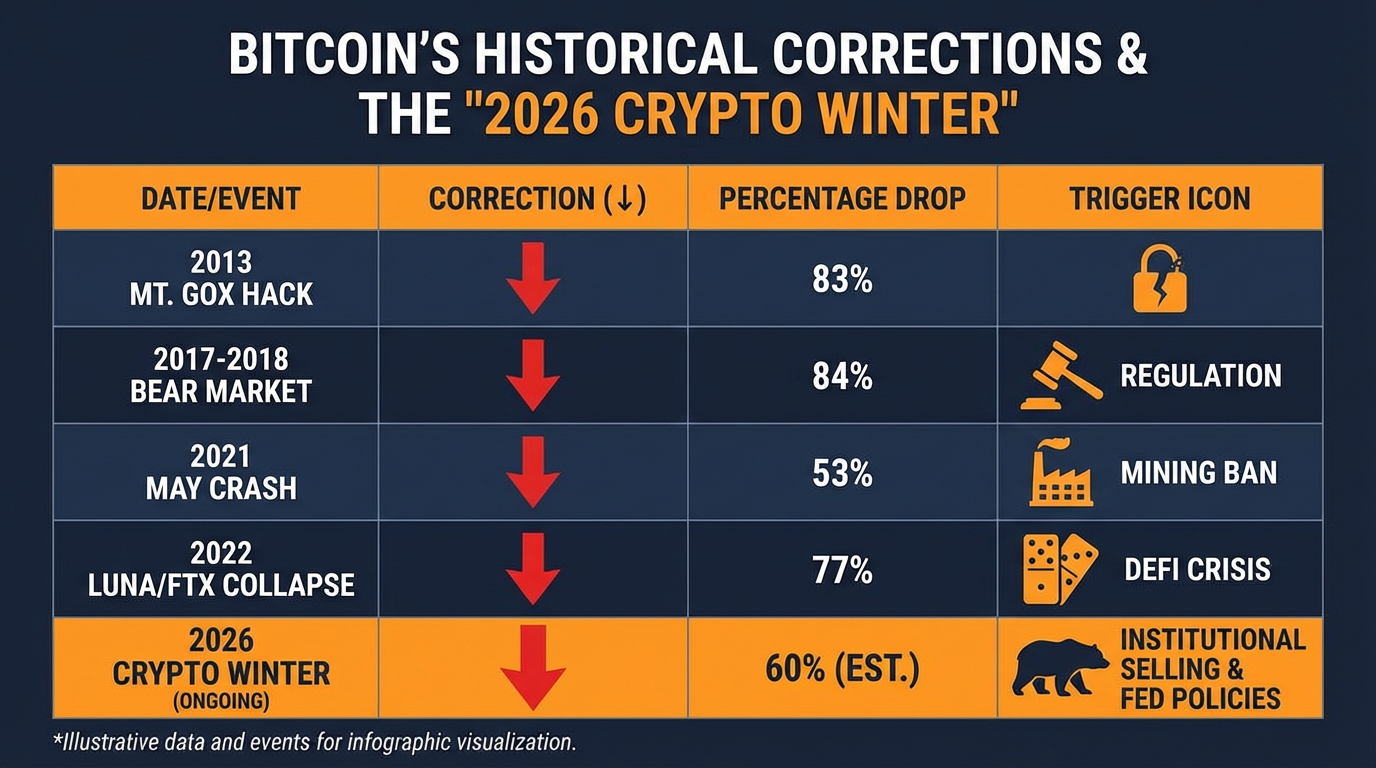
Bitcoin is no stranger to brutal corrections. Since its inception in 2009, it has endured multiple “winters” – prolonged periods of price declines often exceeding 70%. The most recent major one, from November 2021 to November 2022, saw a 76% drop amid the FTX collapse and rising interest rates. That era tested the resolve of even the most dedicated “HODLers” (those who hold on despite volatility).
Unlike previous cycles, the 2026 slump follows a year of unprecedented institutional adoption in 2025, fueled by spot Bitcoin ETFs and pro-crypto rhetoric from the White House. Yet, as one analyst notes, “This is the most brutal crypto winter ever,” with sentiment turning icy fast. For US readers, remember the 2018 winter: Bitcoin fell 84% amid regulatory scrutiny, but it rebounded to new highs by 2021. History suggests patience pays, but with US inflation concerns and Fed hawkishness, this cycle could play out differently.
| Period | Peak to Trough Decline | Key Triggers | Recovery Time to New ATH |
|---|---|---|---|
| 2011 | -93% | Exchange hacks, early volatility | ~2 years |
| 2013-2015 | -86% | Mt. Gox collapse | ~3 years |
| 2017-2018 | -84% | Regulatory crackdowns | ~3 years |
| 2021-2022 | -76% | FTX scandal, rate hikes | ~2 years |
| 2025-2026 (Ongoing) | -50% (as of Feb 2026) | Macro uncertainty, ETF outflows | TBD |
These patterns show Bitcoin’s resilience, but for US investors facing potential capital gains taxes on sales, timing matters. Selling now could lock in losses, while holding might align with long-term tax strategies under current IRS rules.
The Current Decline: A Perfect Storm of Factors
Bitcoin’s slide isn’t isolated; it’s a symptom of broader economic headwinds. As of February 8, 2026, BTC trades around $69,000, recovering slightly from its February 5 low of $62,702. But the path here has been rocky, with four consecutive down months signaling exhausted bullish momentum.
Macroeconomic Pressures and US Policy Shifts
Global markets are in a risk-off mode, exacerbated by US-centric issues. Geopolitical tensions in the Middle East, threats of a government shutdown, and a hawkish Federal Reserve stance have spooked investors. The nomination of Kevin Warsh as Fed Chair on January 30, 2026 – known for advocating higher rates and a slimmer balance sheet – has amplified fears of tighter monetary policy. For Americans, this means potential impacts on everything from mortgage rates to stock portfolios, pushing capital away from speculative assets like crypto.
Bitcoin, once hailed as an inflation hedge, now behaves more like a tech stock, correlating with Nasdaq declines amid credit stress in Silicon Valley.
Institutional and Retail Exodus
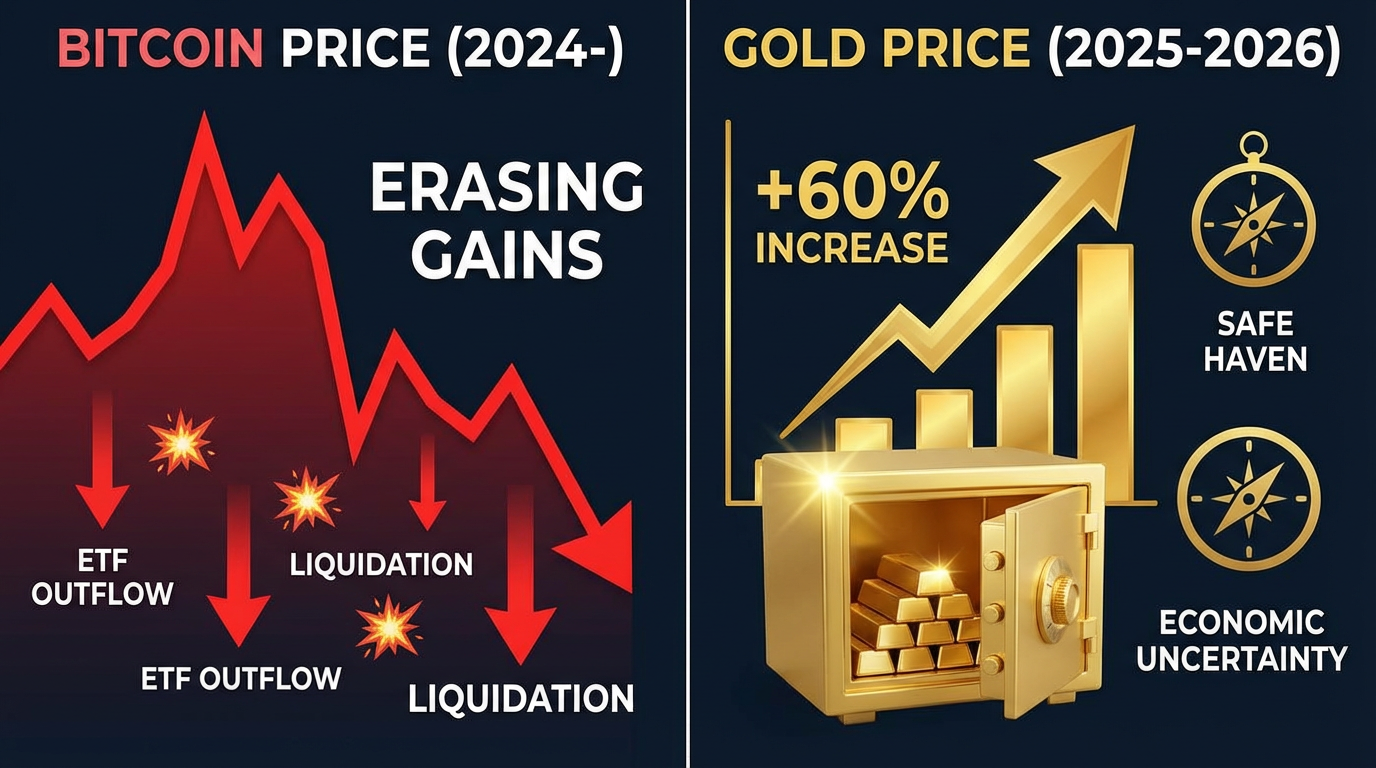
Early adopters and institutions that loaded up in 2025 are now selling. US spot Bitcoin ETFs, a 2024 innovation, have seen outflows topping $1 billion in January alone, with figures like $528 million in a single day on February 2. This fading demand, combined with thin liquidity, has led to massive liquidations – over $1 billion in a day, mostly long positions. For US retail investors using platforms like Coinbase or Robinhood, this volatility underscores the risks of leveraged trading.
Internal Crypto Challenges and Capital Rotation
Community rifts over software upgrades and funding, plus capital flowing to AI stocks and betting markets, have sapped enthusiasm. X discussions highlight “crypto winter” fears, with users noting the lack of memes or hype that buoyed past recoveries. In the US, where crypto lobbying under Trump promised friendlier regulations, delays in reforms have added to the gloom.
Bitcoin vs. Gold: The Safe-Haven Showdown
Bitcoin’s “digital gold” narrative is under siege. While BTC has cratered, gold surged 60-65% in 2025 and hit over $5,000 per ounce in January 2026, driven by central bank buys and safe-haven flows. The Bitcoin-to-gold ratio has sunk to 14-15, with a -0.17 correlation over the past year.
For US investors, gold’s appeal lies in its tangibility and history as a hedge against dollar weakness or tariffs. JPMorgan notes Bitcoin’s volatility relative to gold at a record-low 1.5, suggesting a theoretical $266,000 BTC price on a volatility-adjusted basis – though not imminent. This divergence highlights why many Americans are rotating to gold ETFs or physical bars amid uncertainty.
Short-Selling Surge: Fueling the Downward Spiral
Increased short positions in futures markets are amplifying the drop, but no single “big shorter” like Michael Burry stands out. Liquidations of longs have hit $430 million in an hour, creating a vicious cycle. X chatter points to market-wide bearishness, with analysts eyeing $58,000-$65,000 as next supports. For US traders, this underscores the dangers of derivatives on exchanges like CME.
Implications for US Investors: Strategies in Uncertain Times
This winter hits home. With Trump’s pro-crypto stance, many expected a boom, but realities like ETF outflows and Fed nominations have tempered that. Tax-wise, holding through dips avoids realizing losses, but diversification into gold or stocks may protect portfolios.
Regulatory outlook: Trump’s team hints at clearer rules, potentially boosting adoption. Meanwhile, monitor IRS guidance on crypto reporting for 2026 taxes.
Personal finance tip: If you’re a US holder, consider Roth IRAs for crypto to shield gains from taxes long-term.
Outlook: Light at the End of the Tunnel?
Analysts see this as capitulation, potentially setting up accumulation. JPMorgan’s $266,000 target offers hope, but short-term risks persist. Watch Fed meetings, ETF flows, and halving effects (next in 2028). For US investors, blending crypto with traditional assets like gold futures could balance risk.